
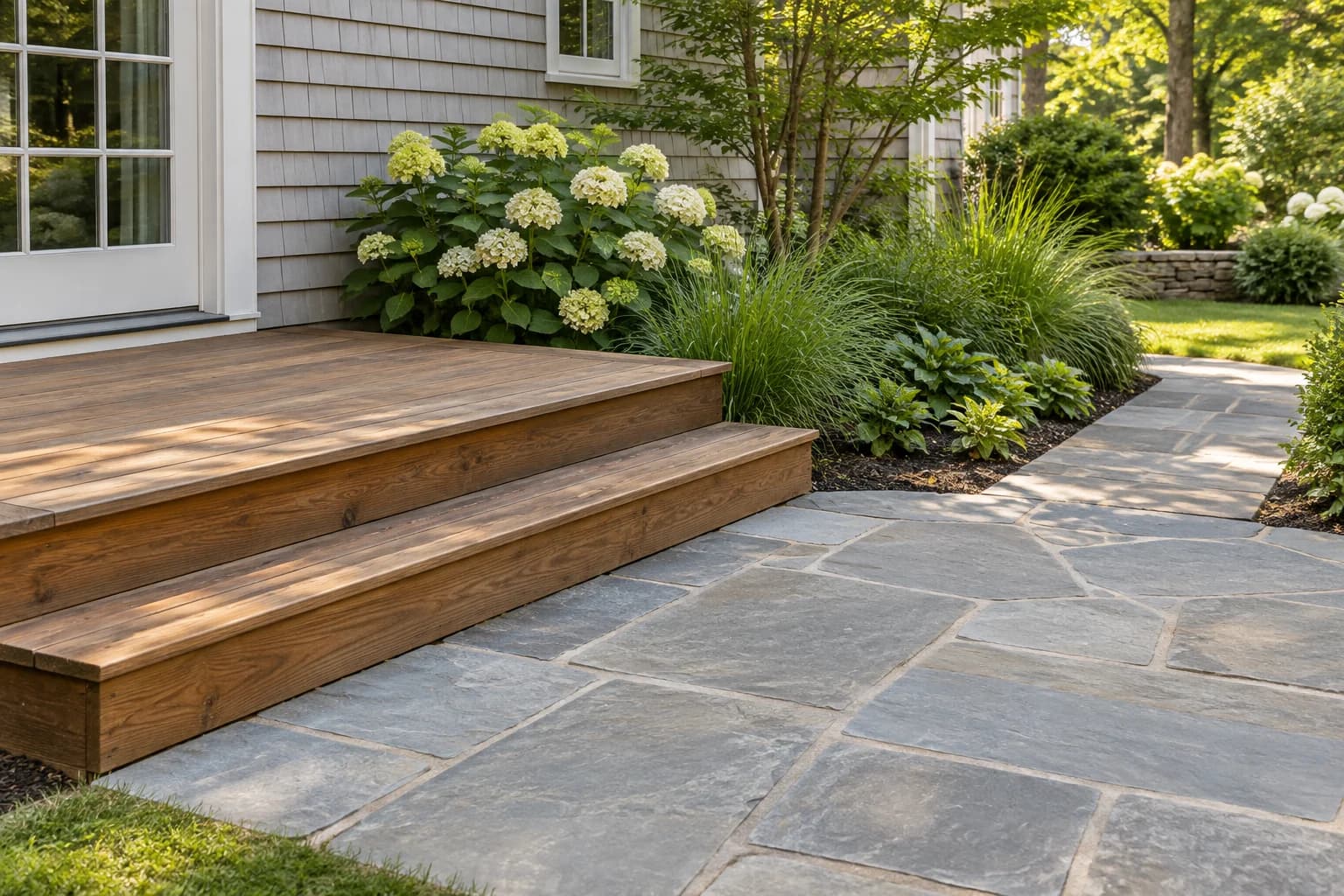
To clean algae off a wood deck before staining or painting, first check that the wood is sound. Use a cleaner suitable for the wood and its existing finish, brush as directed, and rinse with controlled pressure. Complete any required restoration treatment and let the wood reach the new coating's moisture limit before applying a finish. Washing and painting over the buildup is not a complete preparation process.
If you want a painted appearance, solid-color deck stain is opaque: it hides the grain while leaving the wood's texture visible. Exterior floor enamel is another option with its own preparation requirements. Neither should go over active buildup, a failing coating or deteriorated wood.
Does sun-resistant paint prevent wood rot?
Sunlight and moisture affect wood differently. UV exposure weathers the surface, while decay fungi need suitable moisture conditions to grow. A finish that resists sunlight does not solve persistent dampness or restore wood that has already decayed. USDA wood-preservation guidance.
A water-repellent, pigmented finish can help limit weathering. The USDA Forest Products Laboratory favors penetrating finishes for exposed wood decking because they are generally easier to maintain than coatings that can peel. That is a reason to consider stain, alongside the appearance you prefer. USDA deck-finishing guidance.
Check the deck before choosing a cleaner
Look for loose boards, unstable railings, soft or crumbling wood, and peeling paint or stain. On an elevated deck, questionable stairs, supports or connections to the house need assessment by a qualified deck professional before cleaning or coating proceeds. A photograph alone cannot establish structural condition.
Find the name of any previous coating if possible. A cleaner intended for maintenance is different from a treatment that removes weathered fibers or strips an old finish. Dark marks may also have different causes; do not assume every stain is algae.
Keep three questions in mind:
- Is the wood sound enough for the proposed work?
- Is the existing finish being maintained, recoated or removed?
- Do you want visible grain, an opaque color or a smoother painted surface?
Should you pressure wash algae off a wood deck?
Pressure washing can be part of a suitable cleaning process, but high pressure is not the default for wood. Aggressive washing can remove wood from the surface. Test the proposed treatment in an inconspicuous area and let the cleaner and appropriate brushing do their work before rinsing. USDA guidance on cleaning decks.
PrinMaxx Services uses a lower, controlled-pressure approach for suitable wood decks and may use Soft Washing when the wood and finish make it appropriate. Soft Washing means applying and rinsing a chemical cleaning solution at low pressure. Weathered, painted, stained, loose or rotted wood requires individual assessment and may need different treatment or be unsuitable for cleaning.
How to clean a wood deck before staining or painting
Use this sequence to plan the job with the person handling the cleaning and refinishing. The exact product labels determine dilution, application, rinsing and drying requirements.
- Assess the wood and old finish. Resolve questionable boards or structural concerns first. Identify whether the old coating can remain or needs removal.
- Clear and protect the work area. Move furniture and planters where practical, protect adjacent surfaces, and keep people and pets away from the active work.
- Test and apply the appropriate cleaner. Follow its label, brush along the grain where instructed, and avoid treating increased pressure as a substitute for cleaning.
- Rinse and complete the specified preparation. Use a wood-appropriate rinse. If a restorer calls for a separate neutralizer, follow that sequence and its rinsing directions; never mix the products.
- Check readiness for the finish. Allow adequate drying, complete any required sanding and dust removal, and verify wood moisture against the chosen coating's limit.
The product examples below explain which treatments fit each stage. Keep cleaning, repairs and coating as separately defined parts of the project.
Which deck-cleaning products should you consider?
Benjamin Moore's Woodluxe range provides specific cleaning and preparation options. These are product examples to discuss with the professional handling the work, rather than a requirement to apply every treatment to the entire deck.
| Product | What it is for | What to know |
|---|---|---|
| Woodluxe All-In-One Wood Cleaner 018 | Dirt and stains associated with algae, mold and mildew | Follow the label dilution, brush along the grain and rinse thoroughly. It contains sodium hypochlorite. |
| Woodluxe Wood Restorer 016 | Gray, weathered bare wood or previously finished wood that has been stripped | Removes deteriorated surface fibers and staining. Its instructions call for Brightener 017 afterward. |
| Woodluxe Wood Brightener & Neutralizer 017 | Neutralizing after the specified restoration treatment and addressing tannin or rust stains | It is a preparation step, not a treatment that controls algae. |
Check the current Cleaner 018 instructions, Restorer 016 instructions and Brightener 017 instructions for the actual containers being used.
Never mix the products together. In particular, bleach-containing cleaners must not be mixed with acidic brighteners. These are separate treatments with prescribed rinsing steps. Wear the protection specified on the labels and protect plants, nearby finishes and metal fixtures. Stronger mixtures and longer exposure are not shortcuts to better results.
Choose the finish around the look you want
Visible grain: penetrating semi-transparent stain
For sound, absorbent wood, Woodluxe Oil-Based Waterproofing Stain + Sealer, Semi-Transparent C592 is one option. Its penetrating formula provides a UV- and mildew-resistant coating while showing the grain. An old finish that prevents penetration must be removed first.
The C592 instructions specify one uniform coat and wood moisture no higher than 15%. Applying extra coats can create problems rather than extra protection. Confirm the appropriate formulation with the local retailer, and test the color on the prepared wood. C592 technical sheet.
Opaque color: solid deck stain
For homeowners who do not want a transparent finish, Woodluxe Water-Based Deck + Siding Exterior Stain, Solid 694 is a practical option. It covers the grain, retains the surface texture and is intended for exterior decking. The manufacturer recommends two coats for optimal protection.
It still requires sound preparation. Flaking or peeling finishes must be removed, and tannin-rich woods such as cedar or redwood may require the specified primer. Like other film-forming finishes, solid stain can eventually need peeling areas prepared before recoating. 694 technical sheet.
Actual paint: exterior porch-and-floor enamel
If you specifically want paint, look for a product approved for exterior wood floors. Benjamin Moore Floor & Patio Latex Enamel, Low Sheen N122 is one example. Its wood system specifies Fresh Start High-Hiding All Purpose Primer 046 and one or two finish coats, with preparation and primer selection adjusted to the surface.
Plan for traction on stairs and walking areas. The manufacturer warns that floor coatings can become slippery when wet and recommends an appropriate anti-slip aggregate where needed. Ask the supplier which additive and application method suit the exact paint. N122 paint and primer specifications.
Allow for drying before and after finishing
Washing and coating are separate stages. Wood that looks dry on top may not yet meet the selected finish's moisture requirement. Have the person doing the refinishing check it with a moisture meter, complete the required surface preparation and remove sanding dust before application.
The C592 and 694 sheets both specify a maximum wood moisture content of 15% and approximately 48 hours after staining before returning the deck to service. Temperature and humidity affect drying. Floor enamel has its own schedule; follow its label instead of borrowing the stain's timing. Product instructions linked above also govern application temperature and coat spacing.
If old paint needs scraping or sanding, address potential lead hazards before disturbing it. For oil-based products, follow the label's disposal instructions for soaked rags, which can catch fire when improperly discarded.
Common questions
Can you paint directly over algae-related buildup?
Clean and prepare the surface first. Covering the buildup does not meet the cited coatings' requirement for clean, sound wood and does not resolve the underlying condition.
Is solid stain see-through?
No. Solid stain hides the grain while leaving wood texture visible. It is worth considering when your goal is an even color rather than a natural wood appearance.
Will a new finish keep algae away permanently?
No permanent algae-free result should be assumed. Continue clearing leaves and debris, monitor places that remain damp, and maintain the finish according to its instructions. Persistent moisture or drainage problems need attention beyond a surface coating.
Does a Power Washing appointment include painting the deck?
A cleaning estimate establishes the cleaning scope. Repairs, sanding, staining and painting are separate work with their own requirements. Mention your refinishing plans when requesting cleaning so the preparation can be coordinated with the professional handling the finish.
Plan the cleaning before the coating
For more on materials and finishes, read Choosing the Right Cleaning Method. Our Power Washing preparation checklist explains how to get the property ready for a visit.
To discuss cleaning your deck, explore Power Washing or request a free estimate. Include the deck's approximate size, existing finish, visible concerns and any plans to refinish it. PrinMaxx Services confirms cleaning suitability and scope during the estimate. Travel fees may apply for jobs more than 50 miles from Moonachie, NJ.